
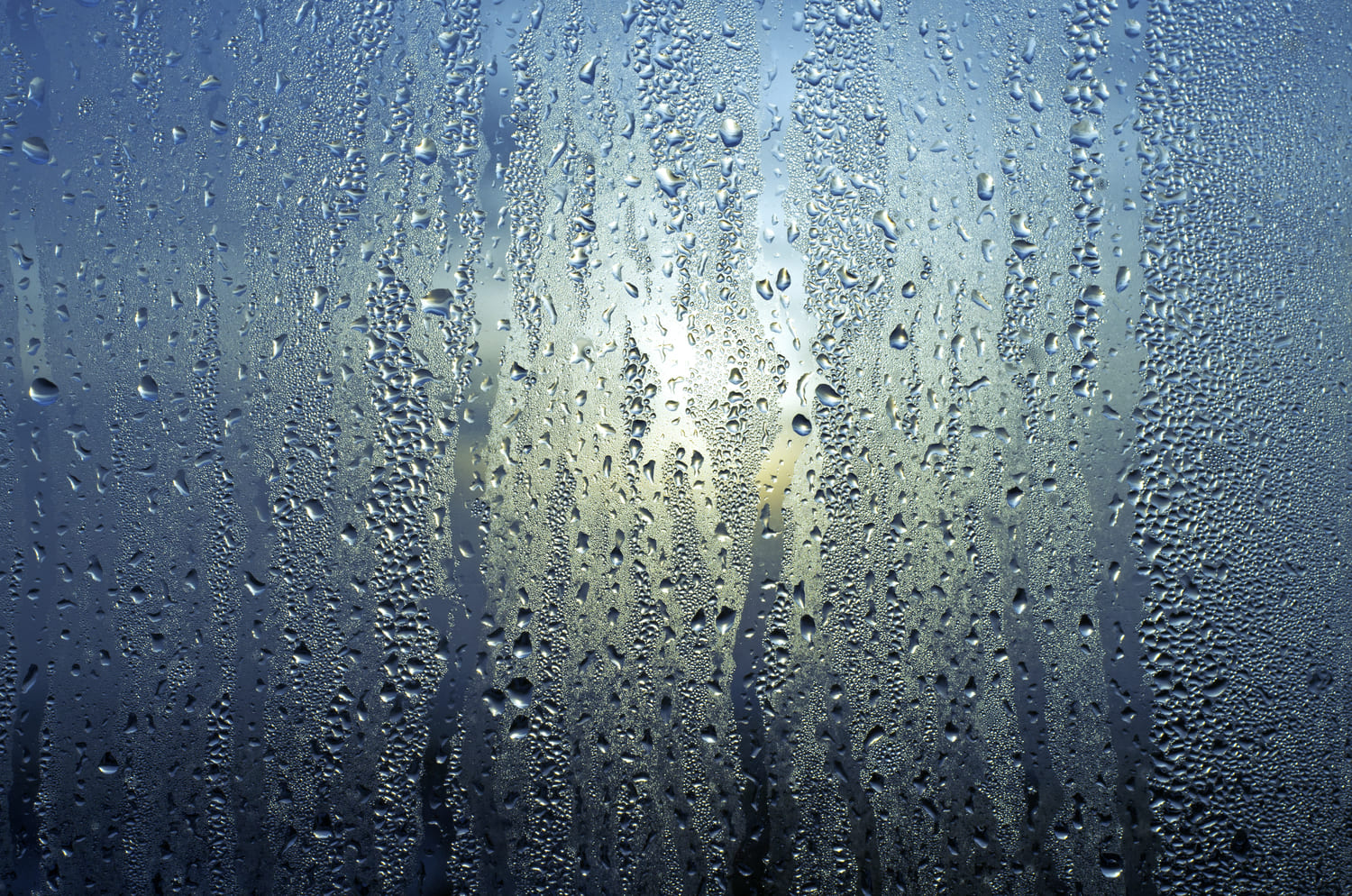
You get up, raise the blind and there it is: the glass streaming with water, a little puddle in the track and a black shadow creeping along the seal. Before you write your windows off, take a breath. Condensation has a very simple physical explanation and can often be fixed without any building work. Other times, it really is the window asking to be replaced. Let’s see how to tell the difference.
The air inside your home always carries water vapour. When that warm air touches a cold surface, it cools down and can no longer hold all its moisture: the vapour turns into droplets. The temperature at which this happens is called the dew point.
An example: with the living room at 20 °C and 60 % relative humidity, the dew point is around 12 °C. If the inside face of the glass or frame drops below that temperature, water appears. That is why it mostly happens at dawn, after a cold night and hours of breathing with everything shut.
On the Alicante coast there is an extra factor: humidity is high almost all year round. Winters are mild, but the air is so laden with moisture that you don’t need freezing temperatures to see misted-up windows.
Pay attention to where it forms, because it is the best diagnosis you can make without any tools.
A family of four produces several litres of water vapour a day without realising it. The usual suspects: cooking without a lid or extractor fan, long showers with the door open, drying clothes indoors, sleeping with the bedroom door closed and butane heaters, which release vapour as they burn.
Try this for a couple of weeks. If the problem goes away, it wasn’t the window.
Occasional condensation is not serious. The problem comes when it happens every day: water soaks the seals and tracks, the silicone turns black and the mould spreads to the wall. If you already have stains, clean them with diluted bleach or an anti-mould product, wearing gloves and with the room ventilated. And tackle the cause, or they will come back.
If you have controlled humidity and ventilation and the water is still there, the window is no longer up to the job. The signs:
A multi-chamber PVC profile or an aluminium profile with a thermal break, combined with low-emissivity glass and a warm-edge spacer, keeps the inside face close to room temperature. If that surface doesn’t drop below the dew point, the condensation disappears.
Note: a new, airtight window means your home stops “breathing” through the gaps. After the replacement, keep up your ventilation routine or consider micro-ventilation built into the hardware.
Sweating windows don’t always mean they need replacing. Check where the water appears, measure the humidity and adjust your ventilation. If that isn’t enough, the problem lies in the glass or the profile, and that’s when it’s worth having a technician take a look. At Replus we’ll tell you honestly whether your window can be fixed or needs replacing.